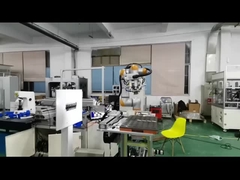
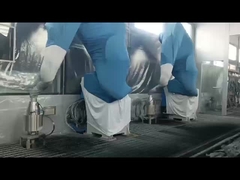
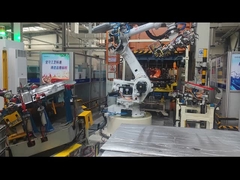
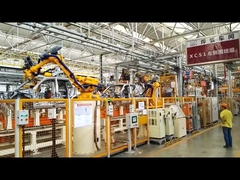
Brief: Watch this overview to discover why many professionals pay attention to this approach. This video provides a detailed walkthrough of the TR-90E Car Painting Shop Robot in action, demonstrating how its AI-powered system autonomously performs vehicle painting. You'll see how it addresses traditional industry challenges by delivering efficient, cost-effective spraying for both whole vehicles and disassembled parts, showcasing its operational capabilities and real-world application in an automotive shop environment.
Related Product Features:
AI-powered biomimetic spraying system that simulates manual painting techniques for consistent, high-quality finishes.
Designed for both whole vehicle painting and disassembly parts operation, covering a wide range of automotive components.
Operates with standard 220V 16A electricity and requires filtered air supply via quick-release connectors.
Optimized for spray booths with dimensions of at least 6.9m x 3.9m x 2.7m, ensuring compatibility with standard workshop setups.
Achieves an average cycle time of 1.3 hours per batch, enabling high throughput with up to 6 batches completed in an 8-hour shift.
Capable of painting vehicles up to 5.1m in length and 2m in width, with adjustable height parameters for roof and panel access.
Includes integrated baking and spraying workflow, enhancing energy efficiency and streamlining the refinishing process.
Monthly capacity of up to 528 pieces under optimal conditions, supporting significant business volume for automotive shops.
Faqs:
What types of vehicles and parts can the TR-90E robot paint?
The TR-90E is designed for both whole vehicle painting and disassembled parts. It can paint components like the front/rear bumper, fenders, doors, roof, skirt, and pillars. For whole vehicles, it handles lengths up to 5.1m, widths up to 2m, and heights between 0.24m and 1.8m (or up to 1.6m for roof spraying).
What are the utility and space requirements for installing the TR-90E robot?
The robot requires a 220V 16A air switch for electricity, filtered air supplied through six quick-release connectors, and a network cable connection in the spray booth. The spray booth must be at least 6.9m long, 3.9m wide, and 2.7m high to accommodate the system.
How efficient is the TR-90E in terms of daily and monthly output?
With an average cycle time of 1.3 hours per batch and an 8-hour workday, the TR-90E can complete 6 batches daily. Under optimal workflow, this translates to a monthly capacity of 528 pieces (based on 22 working days), though actual output may vary with shop business volume and processes.